Whitelisting + Affiliate Marketing: A Win-Win For Creators and Brands
 Follow
Today’s post comes from the PMA Influencer Council!
Co-Authored by:
Stephanie Robbins, Director, Affiliate Practice, Right Side Up
Cassandra Scarbeck, VP of Brand Partnerships, InfluenceLogic
As Affiliate Marketing evolves, managers and creators are finding new ways to optimize and expand their partnerships to better serve brand needs. Relationships are deepening, and the affiliate is becoming more integrated across a brand’s marketing channels.
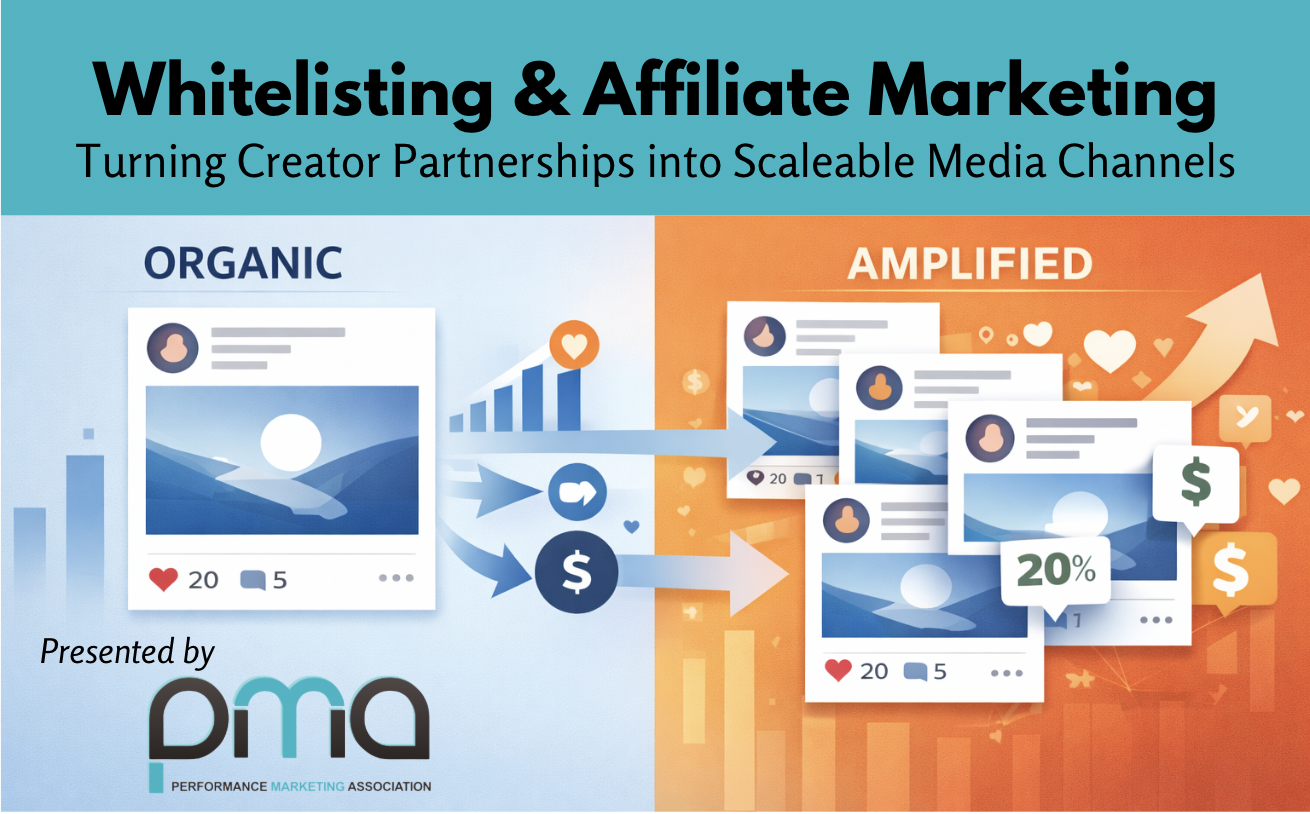
The need for third party validation is the reason affiliate marketing continues to be an integral part of a brand’s marketing strategy. Brands recognize that expanding beyond traditional partnerships to include whitelisting can be a powerful tactic. Similar to User Generated Content (UGC), whitelisting uses creators’ content for paid media. What makes whitelisting different is the brand gets permission to run paid ads through a creator’s account, so the ads appear directly associated with the creator.
When layered onto a proven affiliate partnership, whitelisting becomes even more powerful. Brands can amplify content that is already driving sales and/or leads through the creator’s social profile and reach while strengthening the partnership through incremental revenue opportunities for both brand and creator.
How does whitelisting work with affiliates
With whitelisting, the affiliate gives a brand permission to run paid ads through the creator’s social handle (or paid account access), using the creator’s content and reputation. The brand funds the media spend, controls targeting and optimization, and can scale high converting audiences quickly, while the ad appears “from” the creator. Unlike UGC (user generated content), the affiliate’s tracking links remain in the ad. There may be a commission adjustment based on contract negotiations and ad spend.
Benefits of whitelisting for brands
Third-party validation that drives higher conversion
Brand ads can struggle for visibility and conversions without third-party validation. Creator endorsements increase the ad’s performance because the content feels like a recommendation versus marketing. Whitelisting lets brands put paid spend behind that third-party validation, while still tracking outcomes and optimizing.
Fresh creative
Paid social performance relies on fresh creatives. Consumers can quickly tire of campaigns thereby lowering conversion rates, especially when the campaign is in always-on prospecting. Introducing new creative every 2 to 6 weeks can reduce fatigue and help maintain performance. Whitelisting expands the brand’s creative pool without having to constantly produce net-new assets internally. This allows brands to test multiple creator angles, hooks, and formats, then scale what performs.
Lower risk because you are amplifying proven assets
When you whitelist with an existing proven creator, you are not guessing whether the content will convert because it has already demonstrated conversion, audience fit, and message resonance. Whitelisting simply amplifies what is already working on a wider scale.
Stronger, longer-term partnerships
Whitelisting strengthens the affiliate partnership by providing an additional revenue source for both parties. Instead of a single post or one-time campaign, you are building a system: creators produce and share, brands amplify, both sides learn what converts, and performance improves over time in both ad campaigns and in-feed affiliate promotions.
This approach creates more predictable content pipelines and collaboration, which is what brands strive for with their top affiliates.
Benefits of whitelisting for creators
Multiple revenue streams from one partnership
Creators can earn more than one way in a whitelisting arrangement, depending on the deal structure:
- Affiliate commissions on tracked sales
- Possible usage or licensing fees for paid amplification
This diversification can make creator partnerships more stable, especially when organic reach fluctuates.
Increased reach and follower growth
Paid amplification introduces creators to net-new audiences who may never have seen them organically. When the creative is strong, creators can gain followers and expand their brand presence, while the brand funds the media.
Extended content lifespan
Organic posts often have a short window of peak engagement. Whitelisting extends the revenue potential of the creator’s content by turning it into a scalable paid asset. Creators get more value from what they made, and brands benefit from the creator’s credibility.
Reduced feed fatigue for creators
Creators have an interesting challenge when it comes to monetizing their content. Promote too often and their audience tunes out or may even unfollow. Whitelisting helps creators avoid oversaturating their existing followers with product promotions because the brand’s paid amplification targets a broader audience beyond the creator’s core community. That keeps the creator’s feed from feeling “salesy” while still driving revenue for the creator.
Win-win for brands and creators
Whitelisting aligns with the consumer’s journey which is based on third-party validation, as well as how paid media campaigns operate (test, measure, scale). When you pair whitelisting with creators through affiliate partnerships, you reduce risk, expand creative, and build a growth engine that benefits both sides. If you treat whitelisting as a collaborative performance channel, not just “boosting creator posts,” it will quickly become one of your highest performing campaigns.
About the Authors
Stephanie Robbins is the Director of Affiliate Practice at Right Side Up, bringing 20+ years of experience in affiliate and digital marketing. She leads teams that advise brands on partner strategy, program design, and scalable operations, ensuring affiliate efforts drive incremental revenue and align with broader marketing goals.
LinkedIn: https://www.linkedin.com/in/stephaniezrobbins/
Right Side Up: https://www.rightsideup.com/
Cassandra Scarbeck is the VP of Brand Partnerships at InfluenceLogic, driving new customer acquisition and full funnel impact for DTC brands through scalable 360° influencer programs on YouTube and beyond. She’s a proven performance marketing executive with 20+ years in marketing and more than a decade leading high-performing affiliate and influencer programs that deliver growth with measurable ROI.
LinkedIn: https://www.linkedin.com/in/cassandra-s-058983/
InfluenceLogic: https://influencelogic.com/


Latest posts by Tricia Meyer (see all)
- Closing the Gap: Using AI to Align Publisher Agreements with Best Practices - March 12, 2026
- Whitelisting + Affiliate Marketing: A Win-Win For Creators and Brands - March 9, 2026
- New PMA Webinar: NextGen Reverse Mentoring - March 4, 2026