Will Amazon’s “Buy For Me” Impact Affiliate Marketing?
 Follow
When I first heard about the Amazon “Buy For Me,” last spring, I didn’t think much of it because it sounded like just another attempt at using AI to move people through a shopping cart. But after encountering it “in the wild,” I decided to take it to the PMA Coupons and Deals Council and see what they thought. The result was a lot of surprise and a little worry.
From Council Member Michelle Kalinowski, NYMO & Co.: “The Amazon “Buy For Me” AI shopping agent is a great way for a brand to be present where they were not before, helping to drive the sale for them and not a competitor that may be on Amazon. However, I’m seeing brands with no control over which products are being promoted and the user experience being less than desirable which is concerning. I’ve seen many brands with the highest priced product featured to buy or multiple gift card values shown without products being shared. Because of what we are seeing for brands being pulled in, we are routinely auditing and informing clients of their option to opt out. Many brands were not aware of the AI shopping agent pulling them onto Amazon.“
Read on to learn more about it.
What Is “Buy For Me”?
The best source for this comes directly from Amazon: “You can discover and seamlessly shop for products that are not currently available on Amazon. You can either visit the merchant’s site to shop there or, in some cases, purchase from the merchant’s site without ever leaving Amazon by clicking “Buy for me.” Shipping and delivery, returns and exchanges, and customer service are managed directly by the merchant.”
In other words, these are products that are appearing on Amazon that look very similar to the regular Amazon product listing but are not actually being sold on Amazon. However, if you click through to make a purchase, you may be having Amazon facilitate the purchase for you…. or you may be going directly to the merchant site to make the purchase yourself.
How Does Amazon Source the Information?
Again, Amazon is the best source of truth on this, for better or for worse: “Product information, such as descriptions, prices, and shipping and delivery timeframes, is gathered from publicly available merchant sites or provided directly by the merchant.”
So it’s possible the merchant is working in some way with Amazon to provide a data feed. Or Amazon may just be scraping the data and adding it to their website without the merchant’s permission or even knowledge.
How Does It Work In Practice?
I found it because I was searching on Amazon specifically for a brand that I wanted to buy (RSVLTS). It has happened to me a couple of times since then, always when searching for brand names, where the brand itself does not actually sell on Amazon. The products were integrated so closely into the Amazon search results pages that I almost didn’t notice that they weren’t actually offered by Amazon.
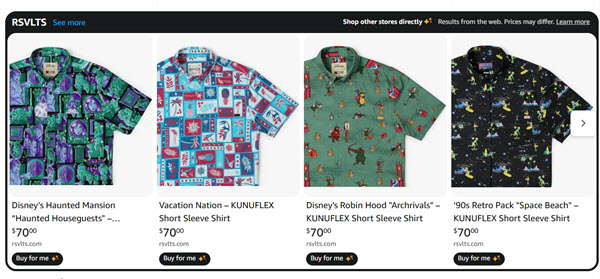
In this case, there was only a “Buy for Me” link that took me to a product page on Amazon, which also looked very similar to the format of a regular Amazon product page.

This launches the “agentic” part of the shopping experience where Amazon places the order on their website and then adds the tracking to your Amazon account.
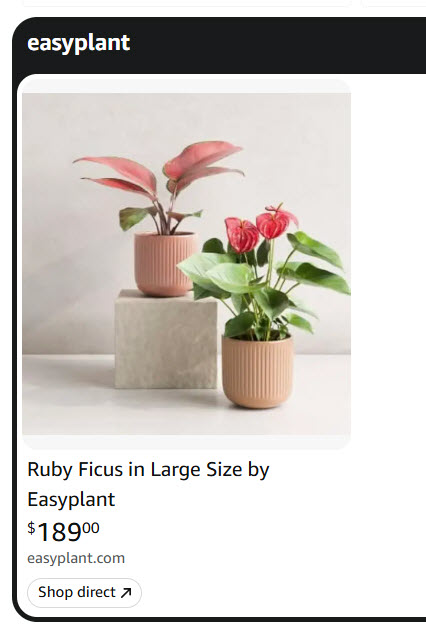
Other brands have a link on the Amazon search results page that says “Shop direct” that just takes you to the merchant website. (These are presumably all of the merchants that have either been scraped or have asked to be added but are not a part of the Amazon Beta test)
Why Should the Affiliate Industry Care?
For Publishers: This is concerning because a publisher is sending traffic to Amazon but not getting compensated for purchases. It’s unknown whether publishers are being compensated for the “agentic” purchases, but it is doubtful and doesn’t show up in the commission structure. Publishers will almost certainly not be compensated when Amazon is routing customers directly to the merchant websites from the results pages. Amazon is benefitting in both cases (either through their deals with the retailers or through the data they are collecting from the searches and clicks).
For Retailers: You may be excited to have your products listed on Amazon with no expense to you. However, consider that they are placing them below the fold and surrounded by your competitors’ products. So Amazon may be ranking for your brand (and maybe even showing up in the LLMs) but then directing potential customers to other sellers. In addition, Amazon does not guarantee the price they give on the “Buy For Me” page, which may cause customer service issues for you later. You are gaining a sale, but you are NOT getting the customer’s full information to add to your mailing list, your loyalty program, etc. They can also only order one product at a time, so you have no chance to upsell them.
What’s Your Take?
Is this a big enough threat for brands and publishers to be on alert? Is there anything either one can or should be doing to mitigate possible negative results?


Latest posts by Tricia Meyer (see all)
- 2027 PMA Board of Directors Nominations Open - October 1, 2026
- PMA Members-Only AI + MCP Webinar - September 3, 2026
- Webinar Replay: Publisher Landscape in an AI Affiliate World - August 27, 2026